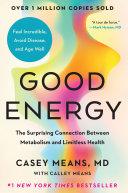
Good Energy
Good Energy by Casey Means is one of 2026's most credible books, appearing on 1 of the year's most respected lists, including McKinsey & Company, for a Consensus Score of 12 out of 100.
Appears on these lists
Our take
AI-draftedMeans, a Stanford-trained physician, argues that a long list of unrelated-seeming conditions, from depression to heart disease, trace back to the same root: cellular metabolic dysfunction, and that fixing mitochondrial function is the real lever for chronic disease that mainstream medicine underweights. The book pairs that thesis with a concrete four-week plan built around biomarkers readers can track themselves. Physician-reviewers were split: some found the big-picture guidance sound and overdue in a system oriented toward treating symptoms rather than causes, while others flagged the book's tendency to sort foods into good and bad camps and to extrapolate confidently from limited data, a concern sharpened by Means's own financial stake in a metabolic-tracking company. The core claim is popular and contested in roughly equal measure.
How the Consensus Score is calculated
Our Consensus Score is our own transparent editorial metric — not a user rating. It weighs each list by the credibility of its source, how recent the listing is, and any award status. Here is the full breakdown.
| Source | Authority | Recency | Award | Contribution |
|---|---|---|---|---|
| McKinsey & Company | 0.80 | 0.70 | 1.00× | 0.56 |
| Weighted sum → Score | 0.56 → 12 | |||
Similar consensus books
Because they appear on some of the same lists.



Frequently asked
What lists is Good Energy on?
Good Energy appears on 1 list in our 2026 corpus, including McKinsey & Company.
What is its Consensus Score?
Good Energy has a Consensus Score of 12 out of 100, our transparent editorial measure of how many credible lists agree on it.